Top Handheld Gaming PCs & Consoles 2025: The Ultimate Buyer’s Guide
The handheld gaming market in 2025 has reached a new level of innovation, offering devices that combine portability with desktop-class performance. Whether you’re looking for a versatile PC-based powerhouse, a premium Android console, or a flexible hybrid design, today’s options cater to every type of gamer. From Valve’s refined Steam Deck OLED to ASUS’s high-performance ROG Ally X, Lenovo’s versatile Legion Go, Ayaneo’s premium Kun, MSI’s Intel-powered Claw, and the compact yet powerful AYANEO Pocket S, each handheld brings unique strengths to the table.
This guide highlights the best handheld gaming PCs and consoles of 2025, focusing on what matters most to buyers: performance, display quality, battery life, ecosystem support, and overall usability. By breaking down quick reviews, pros, and cons, we aim to give you a clear picture of how each device fits different gaming needs. Whether your priority is portability, raw power, or premium design, these handhelds represent the top choices available today.
With so many strong contenders, choosing the right handheld comes down to matching features with your lifestyle and gaming preferences. This guide will help you make that decision with confidence.
How We Chose the Best Handhelds
Selecting the top handheld gaming devices of 2025 required a careful and methodical approach. We didn’t simply list the most popular names; instead, we conducted deep research across multiple highly-rated expert websites, including trusted technology publications, hardware review platforms, and enthusiast communities. By comparing insights from these sources, we identified the products that consistently stood out for performance, design, and user satisfaction.
Our criteria focused on the aspects buyers care about most:
- Performance: Benchmark results, processor efficiency, and ability to handle modern AAA titles.
- Display Quality: Resolution, refresh rate, brightness, and color accuracy for immersive gameplay.
- Battery Life: Real-world endurance under heavy gaming loads.
- Build and Ergonomics: Comfort, portability, and durability for long-term use.
- Ecosystem Support: Compatibility with PC, Android, or cloud gaming platforms.
By synthesizing expert reviews and analyzing buyer-focused features, we ensured that each handheld included in this guide represents a reliable choice. Readers can trust these recommendations because they are grounded in extensive research and validated by multiple authoritative voices in the gaming industry.
Overviews
Steam Deck OLED (2025 Edition)


Valve’s Steam Deck OLED refresh brings a brighter, more vibrant display, improved battery efficiency, and refined ergonomics. It remains the most versatile handheld for PC gamers thanks to SteamOS and wide compatibility with PC titles.
Pros
- Gorgeous OLED screen with better contrast and colors
- Strong game library via SteamOS and Proton compatibility
- Improved battery life compared to the original model
- Comfortable design for long sessions
Cons
- Still bulky compared to slimmer competitors
- Performance lags behind newer AMD-based handhelds
- Limited native Windows support without tinkering
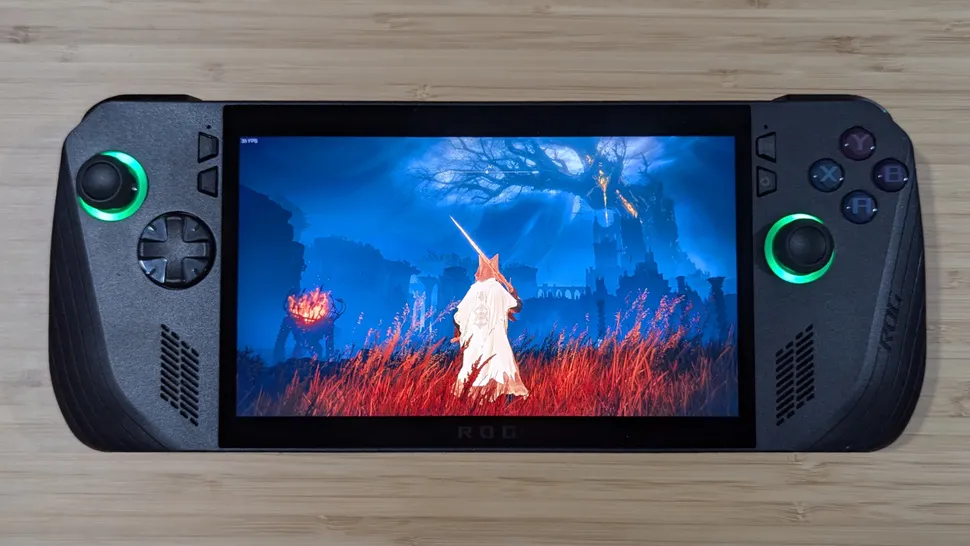
ASUS ROG Ally X

ASUS refined its handheld lineup with the Ally X, offering a powerful AMD Ryzen Z1 Extreme processor, crisp 120Hz display, and Windows 11 integration. It’s a powerhouse for those who want desktop-level flexibility in a portable form.
Pros
- High refresh rate display for smooth gameplay
- Strong performance with modern AAA titles
- Native Windows 11 support for full PC functionality
- Excellent build quality and cooling system
Cons
- Battery life is shorter under heavy loads
- Windows handheld experience can feel clunky without optimization
- Premium pricing compared to competitors
Lenovo Legion Go

Lenovo’s Legion Go stands out with detachable controllers and a massive 8.8-inch QHD+ display. It’s designed for gamers who want versatility, blending handheld portability with docked play and even a pseudo-console feel.
Pros
- Large, sharp display with high resolution
- Detachable controllers add flexibility
- Strong performance with AMD Ryzen chipsets
- Great for both handheld and docked gaming
Cons
- Bulkier and heavier than rivals
- Battery drains quickly at higher resolutions
- Limited ecosystem compared to Steam Deck
AYANEO Pocket S (2025)

A sleek 6-inch Android handheld with a 1080p borderless display, Snapdragon G3x Gen 2 CPU, 16GB RAM, and 512GB storage. Built for premium mobile gaming and emulation with strong cooling and design.
Pros
- Flagship Snapdragon G3x Gen 2 performance
- Sharp 1080p display with vibrant colors
- Premium build quality
- Large RAM and storage
Cons
- Expensive compared to budget handhelds
- Battery drains quickly under heavy use
- Smaller ecosystem than PC-based handhelds
MSI Claw

MSI entered the handheld market with the Claw, powered by Intel’s Core Ultra processors. It’s unique for leveraging Intel’s architecture, offering strong performance in certain workloads and a sleek design.
Pros
- Intel Core Ultra brings competitive performance
- Sleek and modern design
- Good cooling system for sustained play
- Strong integration with MSI’s gaming ecosystem
Cons
- Software optimization still catching up compared to AMD rivals
- Battery life is average
- Smaller community and ecosystem compared to Steam Deck or Ally